
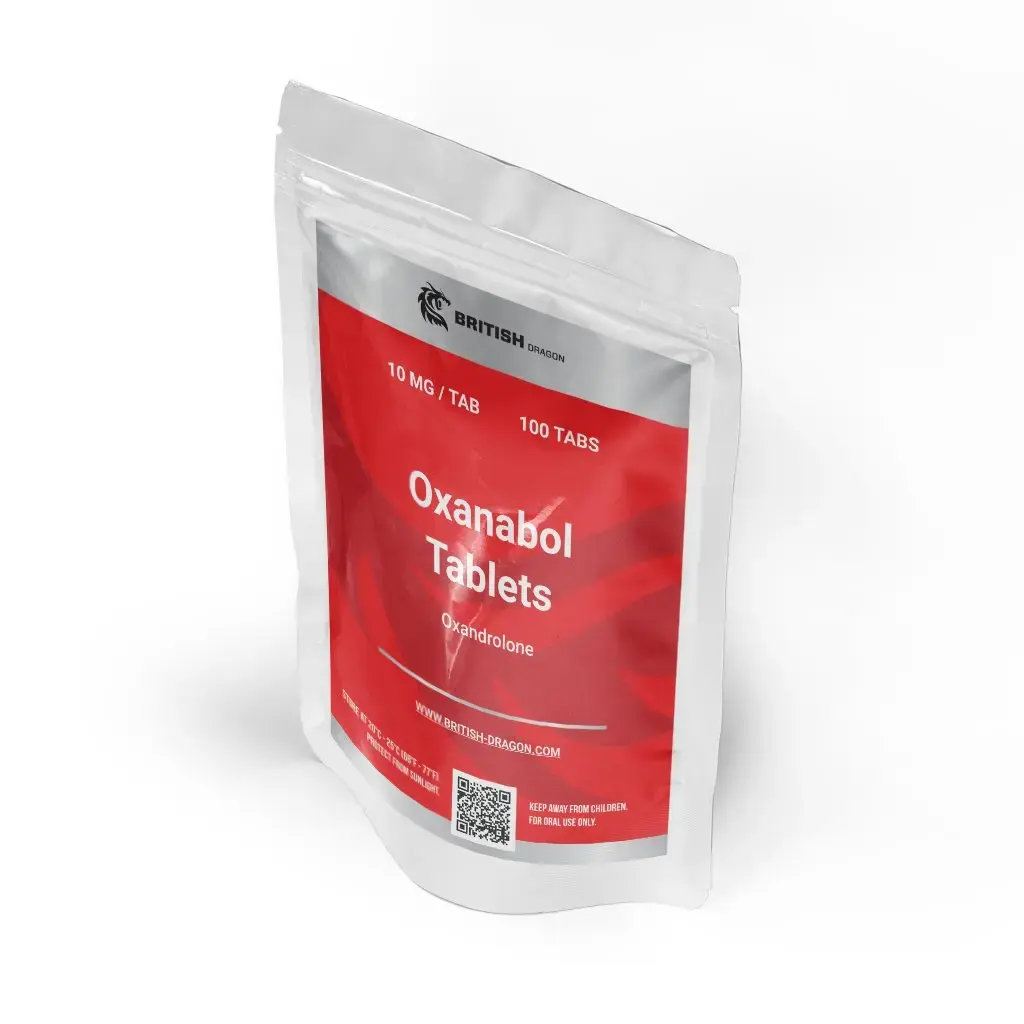
Oxanabol 10 mg is an oral oxandrolone tablet manufactured by British Dragon and dosed at 10 mg per tablet, supplied in packs of 100 tablets.
Oxanabol 10 mg contains oxandrolone, a synthetic oral anabolic-androgenic steroid derived from dihydrotestosterone (DHT). Oxandrolone is FDA-approved in the United States for adjunctive therapy to promote weight gain after weight loss following extensive surgery, chronic infections, or severe trauma, and for relief of bone pain in osteoporosis . It is also used off-label for conditions such as HIV-associated wasting and severe burns .
Oxandrolone is known for its favorable safety profile compared to other oral anabolic steroids. It is not appreciably metabolized by the liver and is primarily excreted unchanged in urine, which reduces its hepatotoxic potential relative to 17α-alkylated compounds . Oxandrolone does not aromatize to estrogen, so it does not cause water retention or gynecomastia . A large observational study of 145 HIV-positive men treated with oxandrolone found that adverse events were rare, with only 4 cases of elevated liver enzymes and no serious adverse events attributed to the drug .
In non-medical bodybuilding contexts, oxandrolone is commonly referenced as a mild oral compound suitable for cutting phases or for users seeking lean mass preservation without significant water retention. Its anabolic activity is approximately 3 to 13 times that of testosterone, with relatively low androgenic activity . However, a double-blind controlled study in 20 HIV-positive men found that oxandrolone 20 mg/day did not significantly increase body weight or lean body mass, though it did reduce HDL cholesterol by 39% and increase LDL cholesterol by 17% after 8 weeks . Such use falls outside approved indications.
Oxandrolone is an oral anabolic steroid derived from dihydrotestosterone with a favorable safety profile and minimal hepatic metabolism .
Oxandrolone is a synthetic derivative of dihydrotestosterone modified with a 17α-methyl group and an oxygen atom at the 2-position of the A-ring. These modifications confer oral bioavailability and resistance to hepatic metabolism. Unlike most oral anabolic steroids, oxandrolone is not appreciably metabolized by the liver and is primarily excreted unchanged in urine, which reduces its hepatotoxic potential .
Oxandrolone binds to androgen receptors in muscle tissue, promoting protein synthesis and nitrogen retention. It is approved for adjunctive therapy to promote weight gain after weight loss following extensive surgery, chronic infections, or severe trauma, and for relief of bone pain in osteoporosis . The drug's anabolic activity is approximately 3 to 13 times that of testosterone, with relatively low androgenic activity .
A large observational study of 145 HIV-positive men treated with oxandrolone found that adverse events were rare, with only 4 cases of elevated liver enzymes and no serious adverse events attributed to the drug . However, a double-blind controlled study in 20 HIV-positive men found that oxandrolone 20 mg/day reduced HDL cholesterol by 39% and increased LDL cholesterol by 17% after 8 weeks .
Oxandrolone is FDA-approved for specific medical indications including weight restoration after surgery, trauma, or infection . Products marketed for research purposes are not approved for human use, and non-medical use falls outside approved indications.
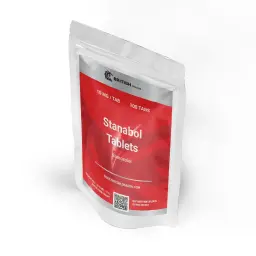
British Dragon offers several oral compounds with distinct characteristics. Methanabol contains methandienone, a more potent bulking oral that aromatizes to estrogen. Stanabol 10 contains stanozolol, another oral that does not aromatize but carries higher liver toxicity. Oxydrol contains oxymetholone, a much more potent and hepatotoxic oral.
Oxanabol's distinguishing characteristic among these compounds is its mild nature, favorable safety profile, and lack of aromatization, making it a commonly referenced option for cutting phases or for users seeking lean mass preservation .
The information below is provided for educational reference only. Oxandrolone is a prescription medication; medical use requires appropriate diagnosis, clinical supervision, and ongoing monitoring. Non-medical use falls outside approved indications.
In clinical practice, oxandrolone dosing is individualized based on the condition being treated. The FDA-approved labeling for weight restoration typically recommends 2.5 mg to 20 mg daily, often divided into two to four doses. A double-blind controlled study in HIV-positive men used 20 mg/day, finding no significant increase in body weight or lean body mass but a reduction in HDL cholesterol by 39% . In non-medical bodybuilding contexts, oxandrolone is commonly referenced at 20 to 50 mg daily, though such use falls outside approved indications.
| Use Case | Common Reference Range | Frequency |
|---|---|---|
| Clinical (weight restoration) | 2.5–20 mg | Daily, divided doses |
| Clinical (HIV wasting) | 20 mg | Daily |
| Non-medical (reported) | 20–50 mg | Daily, single or divided doses |
These non-medical ranges represent community-reported practices and are not derived from controlled clinical trials for performance enhancement. The clinical study using 20 mg/day noted that weight gain was not significant, suggesting that higher doses may be needed for anabolic effects, though this increases cardiovascular risk .
In non-medical bodybuilding contexts, oxandrolone is frequently referenced in cutting cycles, where its mild anabolic activity and lack of water retention are valued. It is often stacked with injectable compounds such as Testabol Propionate or Mastabol 100 to preserve lean mass while reducing body fat.
Because oxandrolone does not aromatize, it does not require aromatase inhibitors for estrogen management. However, it can suppress endogenous testosterone production, so post-cycle therapy may be referenced after use. Cycle duration is typically limited to 6–8 weeks in non-medical contexts.
Oxandrolone is generally well tolerated in clinical use. A large observational study of 145 HIV-positive men found that adverse events were rare, with only 4 cases of elevated liver enzymes and no serious adverse events attributed to the drug . However, a double-blind study found that oxandrolone at 20 mg/day reduced HDL cholesterol by 39% and increased LDL cholesterol by 17% after 8 weeks .
Other potential effects include suppression of endogenous testosterone production, which may lead to testicular atrophy and reduced fertility. Women may experience virilization including deepening of the voice and clitoral enlargement. Blood pressure and liver function monitoring may be considered during extended use.
Oxandrolone suppresses endogenous testosterone production, requiring post-cycle therapy to restore natural hormone levels. In non-medical contexts, PCT protocols typically involve SERMs such as Clomiphene or Tamoxifen, beginning after the compound has cleared the system.
Oxandrolone has approved dosing for specific medical indications. Any information about non-medical use is derived from user-reported practices and is not validated by controlled clinical research. This information does not constitute medical advice.
Oxandrolone is a prescription medication with known risks that require clinical oversight. It is contraindicated in pregnancy and certain medical conditions .
Oxandrolone is contraindicated in pregnancy (Category X) and in patients with known or suspected carcinoma of the prostate or male breast cancer . It should also be avoided in patients with nephrosis or the nephrotic phase of nephritis, and in those with hypercalcemia .
Liver function tests should be obtained periodically during therapy. Post-marketing reports include elevated liver enzymes and rare cases of cholestatic jaundice .
Non-medical use of oxandrolone falls outside approved indications. Product purity does not establish that non-medical use is safe or appropriate for an individual. Oxandrolone suppresses endogenous testosterone production and may affect lipid profiles .
A large observational study of 145 HIV-positive men treated with oxandrolone found that adverse events were rare, with only 4 cases of elevated liver enzymes and no serious adverse events attributed to the drug . However, a double-blind controlled study in 20 HIV-positive men found that oxandrolone at 20 mg/day reduced HDL cholesterol by 39% and increased LDL cholesterol by 17% after 8 weeks .
Other potential adverse effects include suppression of endogenous testosterone production, which may lead to testicular atrophy and reduced fertility. In women, virilization may occur including deepening of the voice, clitoral enlargement, and menstrual irregularities. Edema and fluid retention may occur in patients with pre-existing cardiac, renal, or hepatic disease .
Oxandrolone is not appropriate for everyone. Contraindications include pregnancy, prostate cancer, male breast cancer, nephrosis, and hypercalcemia . Caution is advised in patients with pre-existing liver disease, cardiovascular disease, or diabetes, as anabolic steroids may alter glucose tolerance .
Medically supervised oxandrolone therapy may involve periodic liver function tests, lipid profile monitoring, and assessment of clinical response . Because oxandrolone can suppress endogenous testosterone production, monitoring of testosterone levels may be considered in research or non-medical contexts.
Store tablets in a cool, dry place in the original packaging. Keep out of reach of children. Inspect tablets before use and do not use if they appear damaged or compromised.
Oxanabol 10 mg is supplied through the official British Dragon distribution chain and shipped in original manufacturer packaging with discreet, privacy-focused handling.
The outer shipping package remains discreet, with privacy-focused handling and no unnecessary external product details. Products are supplied through the official British Dragon distribution chain.
To verify your Oxanabol 10 mg product, use the security code on the packaging and cross-check it on the British Dragon official site. Official British Dragon presentation and original packaging help reinforce product legitimacy and buyer confidence.
For complete delivery details, tracking policy, and reshipment terms, please see our Shipping Info page.
Proper storage conditions help preserve tablet stability and overall product integrity throughout shelf life.
Store at controlled room temperature (15–25°C) in a cool, dry place, away from direct light and moisture. Keep tablets in their original packaging until use to protect from humidity.
Inspect tablets before use and do not use if they appear discolored, cracked, or otherwise compromised. Keep out of reach of children.
Answers to common questions about Oxanabol 10 mg, the Oxandrolone compound, and its applications.
Oxanabol 10 mg contains oxandrolone, a mild oral anabolic steroid. In clinical medicine, it is approved for weight restoration after surgery, trauma, or infection, and for bone pain in osteoporosis . In non-medical bodybuilding contexts, it is commonly referenced for cutting phases and lean mass preservation, though such use falls outside approved indications.
Clinical dosing ranges from 2.5 mg to 20 mg daily, often divided into multiple doses . In non-medical contexts, oxandrolone is commonly referenced at 20–50 mg daily. These non-medical practices are not derived from controlled clinical trials for performance enhancement.
Yes, oxandrolone suppresses endogenous testosterone production, requiring post-cycle therapy to restore natural hormone levels. In non-medical contexts, PCT protocols typically involve SERMs such as Clomiphene or Tamoxifen.
Oxandrolone binds to androgen receptors in muscle tissue, promoting protein synthesis and nitrogen retention. It is not appreciably metabolized by the liver and is primarily excreted unchanged in urine . Its anabolic activity is approximately 3 to 13 times that of testosterone, with relatively low androgenic activity .
Clinical studies have evaluated oxandrolone over 8 weeks, with lipid changes observed during this period . In non-medical contexts, users commonly report effects on strength and lean mass beginning within 2–4 weeks of use, though individual response varies.
There is no universally established "best" oral steroid, and oxandrolone has not been validated in controlled trials for performance outcomes. Its favorable safety profile and lack of aromatization make it a commonly referenced option, but its mild anabolic activity may not produce dramatic gains .
Oxanabol and Methanabol have different characteristics. Oxandrolone is a mild oral that does not aromatize and has a favorable safety profile, while methandienone is a more potent bulking compound that aromatizes to estrogen and carries higher hepatotoxicity. They are used for different purposes in non-medical contexts.
Oxanabol and Stanabol 10 are both oral steroids that do not aromatize, but they differ in other ways. Oxandrolone has a more favorable safety profile and is primarily excreted unchanged in urine , while stanozolol carries higher liver toxicity. They are used for similar purposes but have different risk profiles.
Oxanabol 10 mg is labeled at 10 mg of oxandrolone per tablet. This is within the clinical range of 2.5–20 mg daily . In non-medical contexts, 10 mg is often considered a low dose, with 20–50 mg daily commonly referenced for performance purposes.
Oxanabol 10 mg is labeled at 10 mg of oxandrolone per tablet. It is supplied as oral tablets in packs of 100 tablets manufactured by British Dragon.
Yes. A double-blind controlled study found that oxandrolone at 20 mg/day reduced HDL cholesterol by 39% and increased LDL cholesterol by 17% after 8 weeks . Lipid profile monitoring may be considered during use, especially in individuals with pre-existing cardiovascular risk factors.